Sólheimajökull Glacier Hike: Every Tour, Compared Honestly
Iceland's meteorological office flagged the old approach to this glacier on 22 July 2026, and operators cut a new track around Jökulhaus within days. Every Sólheimajökull glacier hike is running again, and this page compares every one you can book.
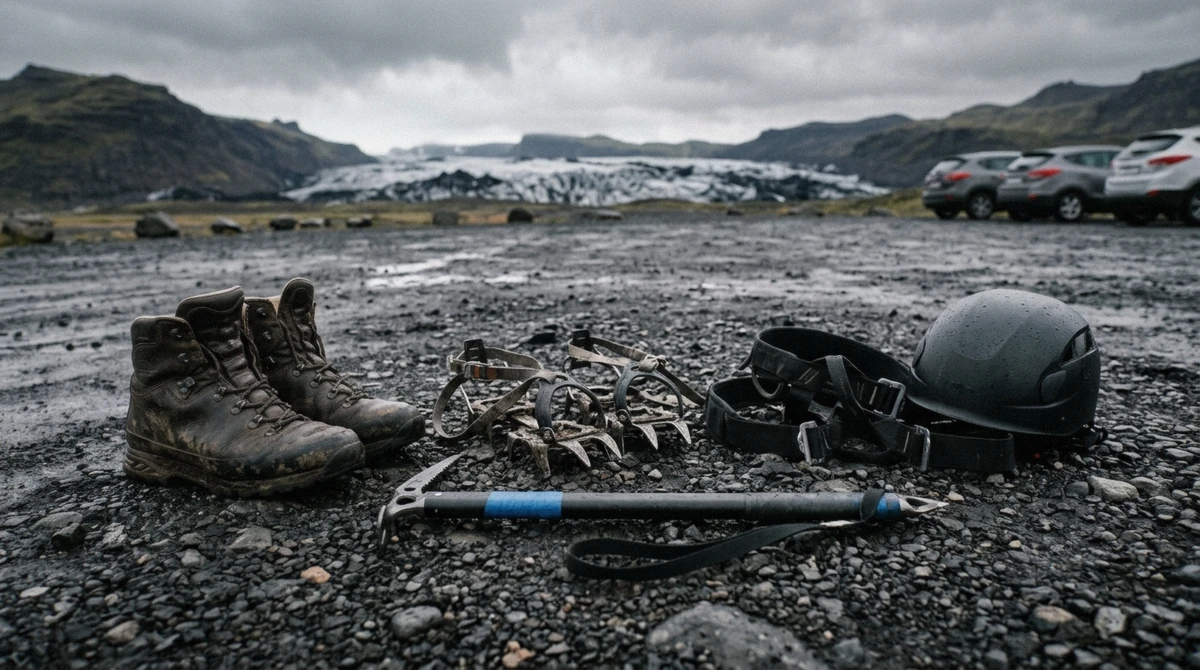
A guided Sólheimajökull glacier hike costs $104 to $237 and runs 3 to 11 hours, of which 1 to 2.5 hours are spent on the ice. Every tour supplies crampons, helmet, harness and ice axe; you bring boots with ankle support. Walking to the glacier viewpoint is free and takes 10 to 20 minutes from the car park, but stepping onto the ice without a certified guide is not something any operator or the Icelandic authorities will back.
Key takeaways
Best rated and cheapest at once: Icelandic Mountain Guides at $104 for four hours, 4.9 from 869 reviews, groups capped at 14
Most reviewed: the eleven-hour day from Reykjavík at $200, 4.8 from 1,671 reviews, which adds Seljalandsfoss, Skógafoss and Reynisfjara and needs no rental car
Shortest way onto the ice: three hours with Tröll for $120, meeting at the Sólheimajökull car park rather than in the capital
Top of the range: $237 for the ice climb, six guests per guide, with a roped ascent of a vertical wall after the walk
Crampons, helmet, harness and ice axe come with every tour here. Boots do not, and rent for 1,500 ISK, about $12 if you did not pack them
Every tour cancels free up to 24 hours ahead and runs year-round, which matters on a coast where a departure can turn around on wind alone
Since 22 July 2026 groups reach the ice by a new track around Jökulhaus after the old south-east approach was flagged for rockfall. What changed, in full
Driving yourself: 158 km from Reykjavík, about 2 hours 15 minutes, then 750 ISK to park through the Parka app
Every Guided Sólheimajökull Glacier Hike You Can Book
Four operators sell distinct products on this glacier. They differ less in what you see than in where you meet, how many people walk with you, and how much of the clock you spend with crampons on.
from $104Cheapest and best rated
Sólheimajökull Glacier Hike: Adventure in a Small Group
★★★★★★★★★★4.9(869 reviews)· 4 hours
Icelandic Mountain Guides cap the group at 14 and spend four hours getting deeper onto the ice, past crevasse edges and meltwater channels. Guides here also sit on the local search and rescue team.
Arctic Adventures runs the version most people book. Meet at the car park for the four-hour hike, or take the Reykjavík pickup and the day stretches to thirteen hours with Seljalandsfoss, Skógafoss and Reynisfjara added.
Tröll Expeditions' three-hour walk from the Sólheimajökull car park. The route heads for the ice tunnels, moulins and crevasse edges rather than distance, so it suits a half day between Skógafoss and Vík.
Sólheimajökull Glacier Adventure: Small Group Glacier Hike
★★★★★★★★★★4.7(272 reviews)· 4 hours
David The Guide caps this four-hour walk at ten people, which is why it moves at the pace of the group rather than the timetable. Guides fill your bottle from a meltwater stream on the way up.
Reykjavik: Glacier Hike, Waterfall and Black Sand Beach
★★★★★★★★★★4.8(1,671 reviews)· 11 hours
Eleven hours from Reykjavík: the glacier hike plus Seljalandsfoss, Skógafoss and the black sand at Reynisfjara, with pickup included. The most reviewed way to do a Sólheimajökull glacier hike without renting a car.
Arctic Adventures' combination of a glacier hike and a first ice climb, in groups of up to eight. Minimum age is 14 here rather than the usual 8, and the Reykjavík option turns it into a full day.
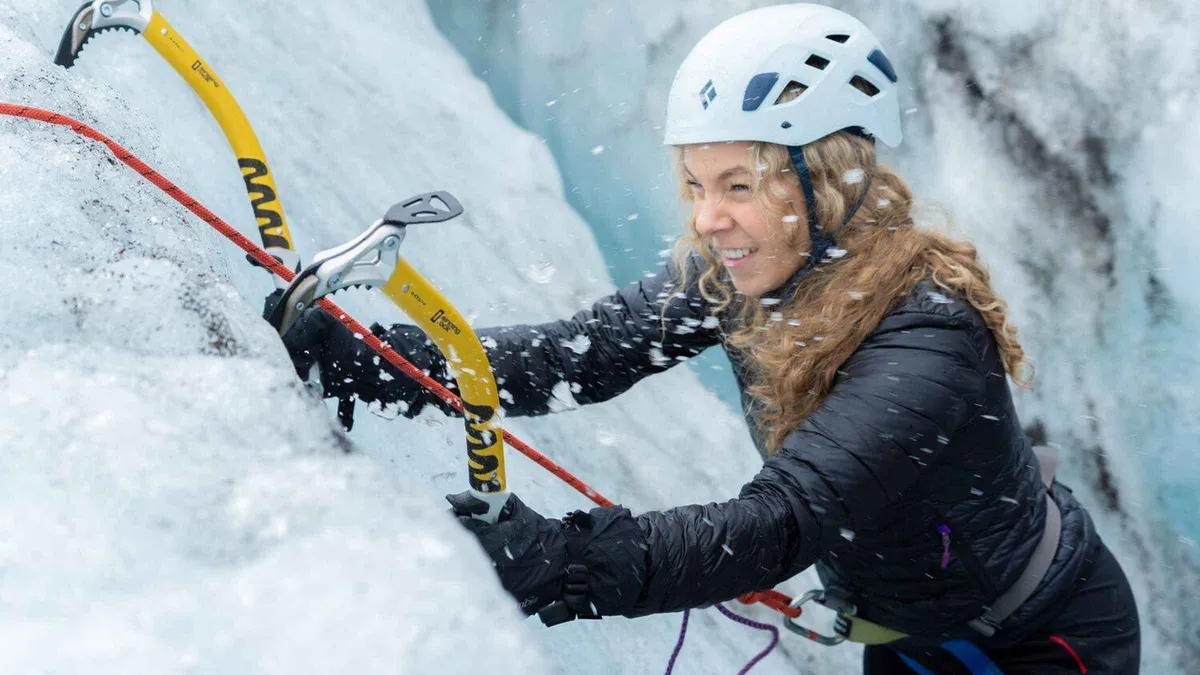
Six guests per guide, ice axes in both hands and a roped climb up a vertical wall after the hike. No experience needed, but you will feel it in your forearms the next day.
The terminus of this glacier moved faster than the guidebooks did. Here is the situation as of August 2026, and why the hikes are still selling.
⚠️
A new lagoon and a thinning ice bridge
On 22 July 2026 the Icelandic Meteorological Office reported a small lagoon that had formed east of the glacier tongue. The ice bridge linking it to the glacier had thinned through melting and calving, and the office warned that unstable ice there can give way, dropping people into deep, cold glacial water. Calving into the small lagoon can also throw up surge waves.
🪨
Rockfall over the old south-east approach
The same bulletin flagged Jökulhaus, the mountain above the south-east access route, for rockfall. Falling rock there can be large enough to injure, and the risk climbs after heavy rain and during freeze-thaw. Visitors were told to spend as little time as possible under steep slopes and to listen for rumbling or look for freshly fallen rock.
🧭
The route moved; the glacier stayed open
Operators suspended glacier trips for several days while they reassessed. Landowners then agreed to let groups pass through the valley circling south and east of Jökulhaus, and the operators cut a track down that slope to the ice. Authorities and the tourism companies decided against closing Sólheimajökull, choosing clearer warnings and better signage instead. Tours resumed on the new approach.
Checked 5 August 2026 against the Icelandic Meteorological Office bulletin of 22 July 2026, Iceland Monitor and Iceland Review. Conditions at a glacier margin change week to week; your operator makes the call on the day and refunds a cancelled departure in full.
Free cancellation 24h
Reserve now, pay later
Certified glacier guides
Crampons and axe included
From $104Cheapest guided walk on the ice
1–2.5 hTime your crampons are actually on
158 kmFrom Reykjavík, about 2h15 by car
Year-roundDepartures every month, weather allowing
best rated
The One We Would Book First
Sólheimajökull Glacier Hike: Adventure in a Small Group
★★★★★★★★★★4.9(869 reviews)
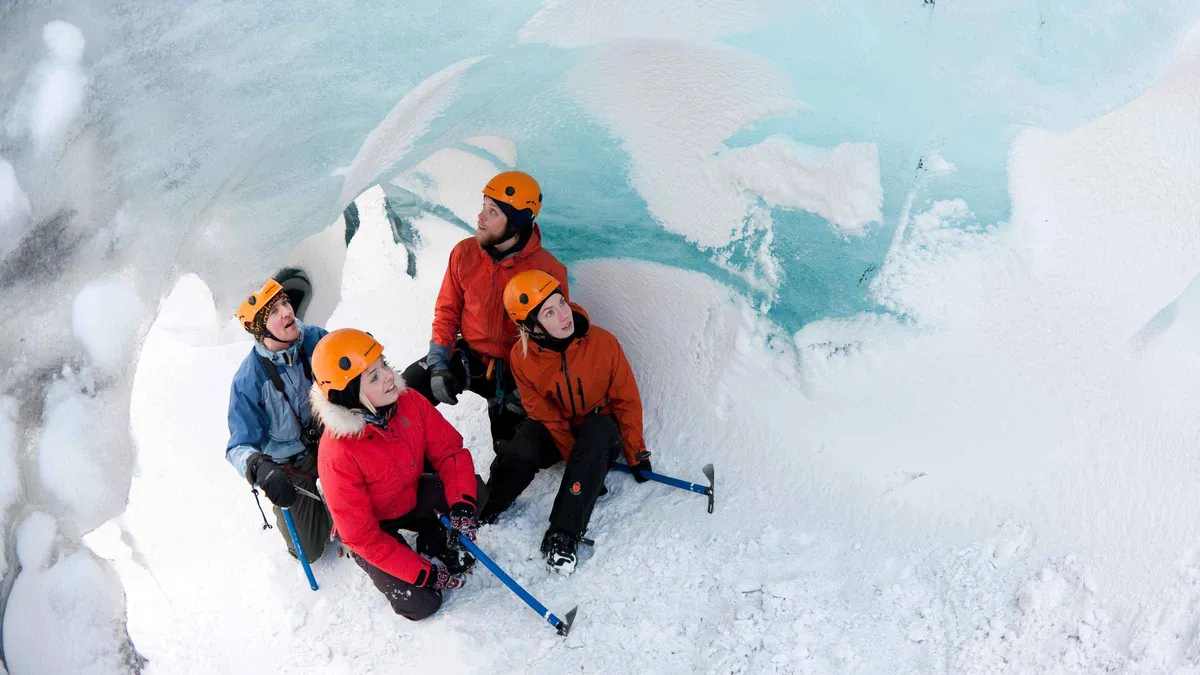
Icelandic Mountain Guides caps this four-hour hike at 14 people and spends the extra time going deeper onto the ice — crevasse edges, meltwater channels and, when the ice allows, a look inside a cave.
Duration
4 hours, with roughly 2 of them on the glacier
Meeting Point
Icelandic Mountain Guides base camp at the Sólheimajökull car park, end of Road 221
Included
Certified glacier guide, crampons, helmet, harness, ice axe, rain jacket or trousers if you need them
Price Range
$104 per person, rated 4.9 from 869 reviews, groups capped at 14
The calendar below covers Arctic Adventures' four-hour walk at $106, the closest GetYourGuide equivalent to our top pick and the most reviewed hike meeting at the glacier itself. Summer mornings go first; winter thins to one or two departures a day once daylight drops under six hours.
Guided Hike, Free Viewpoint, or a Day Trip From Reykjavík
People searching for a Sólheimajökull glacier hike are after one of four different days out, and only three of them end with you standing on ice. The gap between them is mostly time and transport, not price.
Way in
Cost
Total time
Book
On the ice?
Suits
Guided hike from the car park
$104 to $120 per person
3 to 4 hours
Yes, 1 to 2 hours
Anyone with a car and half a day
Free walk to the viewpoint
750 ISK parking only
30 to 45 minutes return
No, you look at it
A leg-stretch on a South Coast drive
Day trip from Reykjavík
$200 to $211 per person
11 to 13 hours
Yes, about 1 hour
Travellers with no rental car
Hike plus ice climbing
$211 to $237 per person
4 to 5.5 hours
Yes, plus a roped wall
Anyone who wants the axes to earn their keep
Sólheimajökull by the Numbers
Two figures explain most of what people get wrong here. The Iceland Glaciological Society measured the terminus 1,232 metres behind its 1930 position in 2010, and a four-hour tour puts you on the ice for roughly two hours.
1,232 mBehind its 1930 positionFront positions have been measured every year since 1930 by the Iceland Glaciological Society: 977 m of retreat to 1969, a 495 m advance through the colder years to 1995, then 750 m of retreat in the fifteen years to 2010.
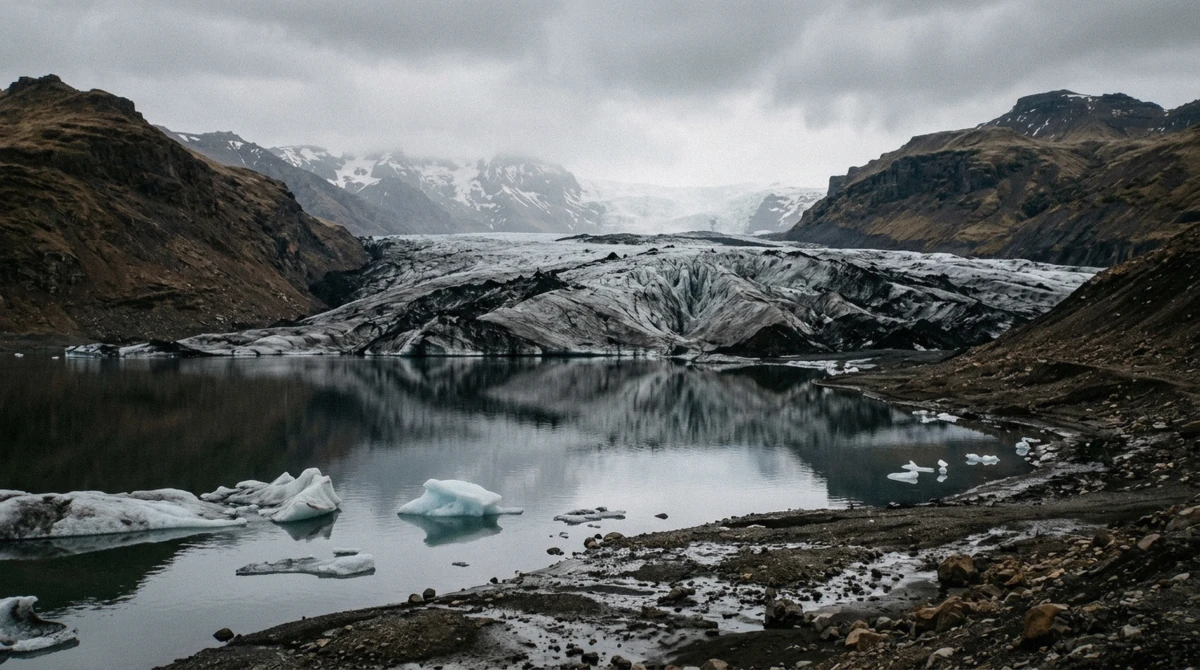
2011The year the lagoon appearedMeltwater pooled where the ice used to sit. Katla UNESCO Global Geopark puts it at 60 metres deep and expects it to reach up to 4 km long over the coming decades.
158 kmFrom Reykjavík on Route 1About 98 miles and two hours fifteen minutes without stops, then 5 km of Road 221. From Vík it is a 45-minute drive west, which is why the shorter tours meet here rather than in the capital.
750 ISKParking at the glacierAbout $6 for a private car at 123 ISK to the dollar, checked 16 August 2026, paid through the Parka app, and you can settle it within 24 hours of leaving. The gravel lot is open round the clock but camping is not allowed.
EU 34Smallest boot a crampon fitsGlacier crampons do not clamp to anything smaller, which sets the practical minimum age at 8 on most hikes. Arctic Adventures' ice-climbing tour raises that to 14.
1–2.5 hTime on the ice, not in the vanListings sell total duration. Gearing up, the walk in and the return eat two to nine hours of it depending on the tour, and the crampon time is what decides how the day feels.
Everything Worth Knowing Before You Book
What a Sólheimajökull Glacier Hike Actually Is
Sólheimajökull is a tongue of ice sliding off Mýrdalsjökull, the ice cap that sits on top of the Katla caldera. It runs down its valley between two volcanoes people have heard of: Katla under the ice, and Eyjafjallajökull to the west, the one that grounded over 100,000 flights in 2010.
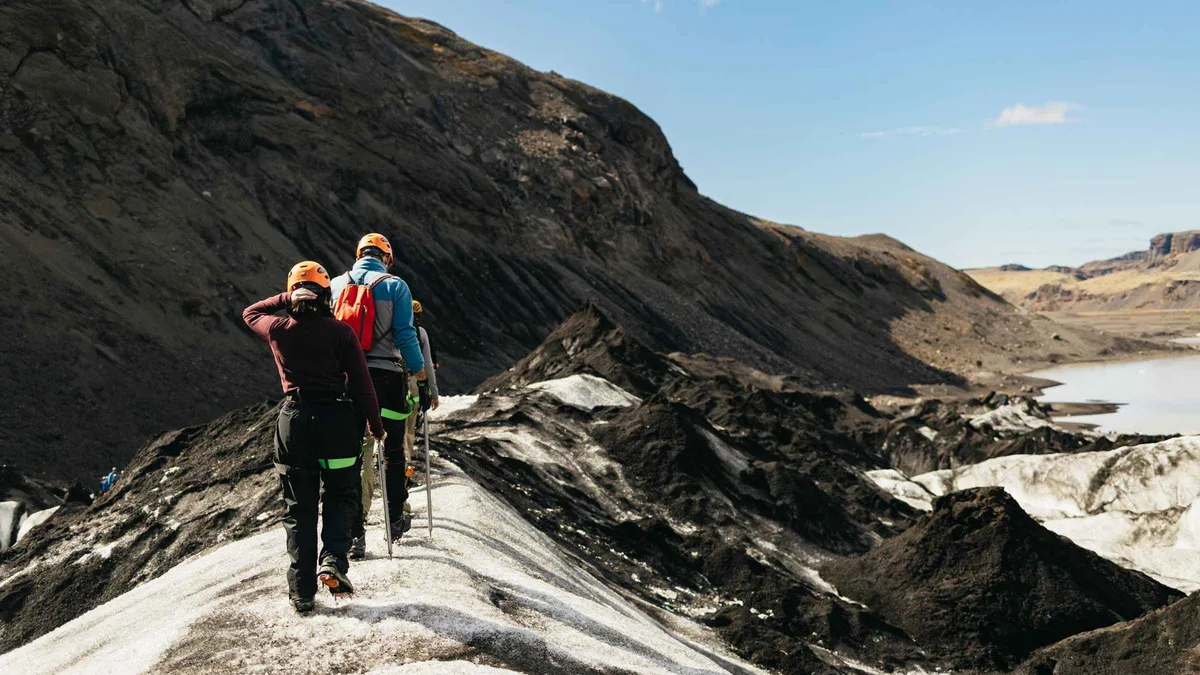
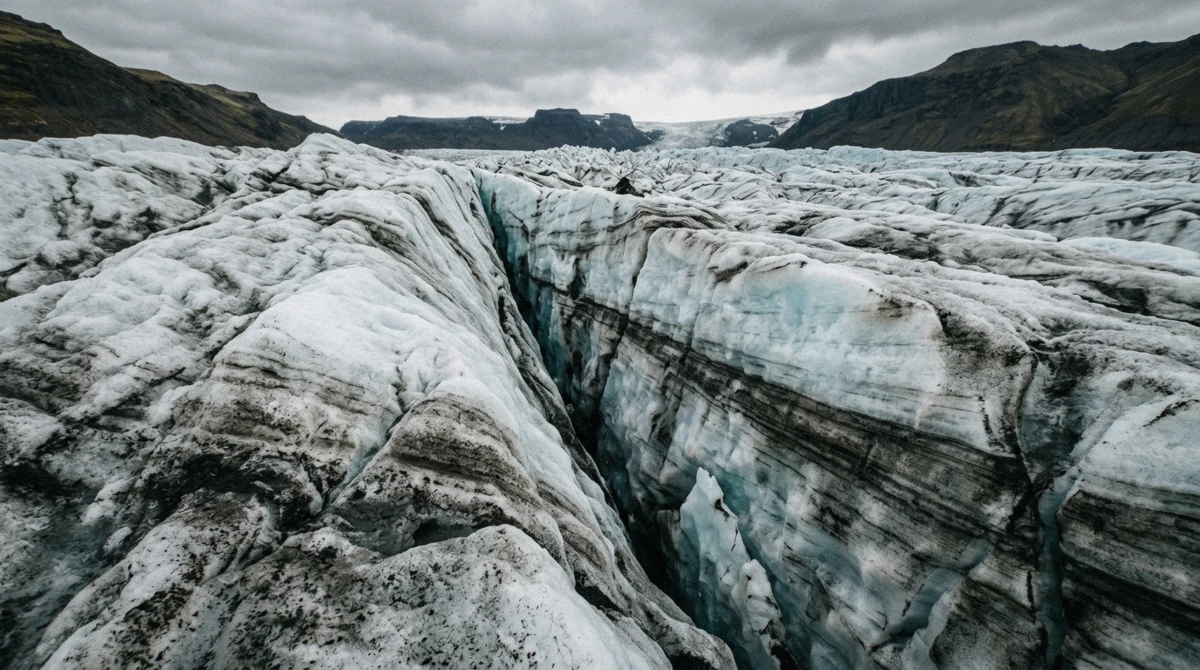
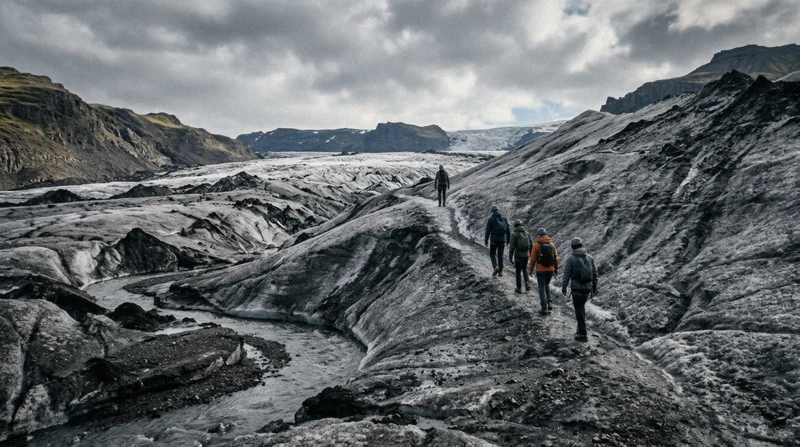
That position is why the ice looks the way it does. Every eruption drops ash on the glacier, and every melt season strips ice away and exposes another layer. You walk on a surface streaked black and grey, not the postcard white, with bands of blue where the ice is compressed hard enough to squeeze out the air.
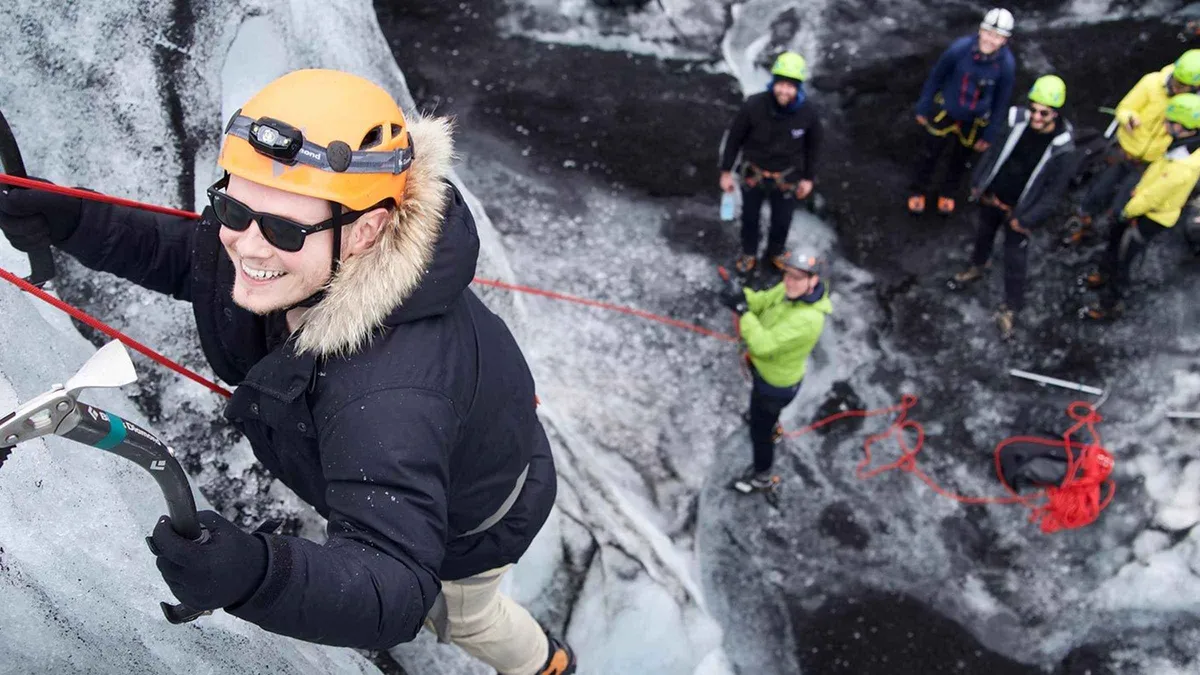
The hike itself is a walk, not a climb. Guides fit crampons at the car park or at the foot of the ice, run through a briefing that lasts a few minutes, and then lead a line of ten to fourteen people up onto the tongue. You gain height slowly, stop often, and turn back the same way. Nobody ropes up on the standard tours, and nobody needs previous experience.
The July 2026 Access Change, in Full
On 22 July 2026 the Icelandic Meteorological Office published a hazard notice for the glacier margin. Two things had changed. A small lagoon had opened east of the tongue, and the ice bridge that connected it to the glacier had thinned through melting and calving to the point where it could collapse under people. Separately, the office warned of rockfall from Jökulhaus, the mountain standing over the south-east approach that groups had been using to reach the ice.
Operators pulled their departures within a day. Iceland Monitor reported the cancellations on 23 July, with companies saying the decision came from their daily risk assessment rather than any order from above.
What happened next is the part worth knowing if you are booking now. Rather than close the glacier, the operators and the authorities agreed to keep access open with stronger warnings and clearer signage. Landowners gave permission for a new line through the valley that curls south and east around Jökulhaus, and the companies cut a track down that slope to the ice. Groups now come at the glacier from a different angle, out from under the loose rock.
So the practical answer for a traveller: hikes are selling and running, the route is not the one described in older blog posts, and the operator decides each morning whether conditions hold. If they cancel, the money comes back. If you plan to walk to the viewpoint on your own, keep off any ice near the water and do not linger under steep ground.
Getting There, Parking and the Walk In
Sólheimajökull sits 158 km (98 mi) east of Reykjavík on Route 1, a drive of about two hours and fifteen minutes if you do not stop. Coming from the west, you pass Skógar and take a left onto Road 221 roughly 6 km later, just after the bridge. From Vík it is 45 minutes west, and the turn is a right about 3 km past Road 222, just before the bridge. Road 221 is a short run of gravel, about 5 km, and any rental car handles it.
Parking costs 750 ISK, about $6 at 123 ISK to the dollar (checked 16 August 2026), for a private car. Pay through the Parka app, and you have 24 hours after leaving to settle it. The lot is open around the clock; overnight camping is not allowed. Facilities are thin: paid toilets and nothing else. The nearest food, fuel and a proper café are in Vík, 32 km (20 mi) east.
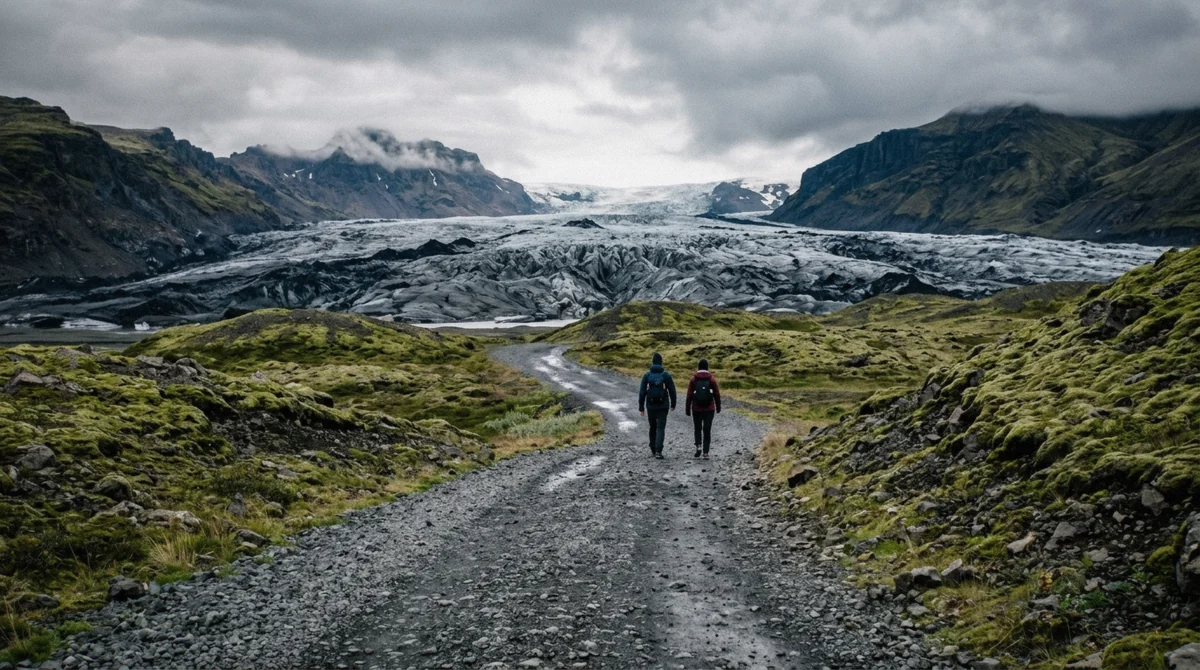
From the lot, a flat gravel path reaches the glacier viewpoint in 10 to 20 minutes. Tour groups meet at the lot itself, and operators ask you to arrive 20 minutes early because crampons are sized to each person's boot and fitting fourteen pairs takes time. There is no street address. The GPS point is N 63.5328, W 19.3697.
Turn off Route 1 at Road 221, signposted Sólheimajökull, between Skógafoss and Vík
5 km of gravel to the car park, fine for a two-wheel-drive rental
750 ISK parking via the Parka app, payable within 24 hours of leaving
Arrive 20 minutes before your start time so crampons can be fitted
Paid toilets at the lot, no café; nearest supplies are in Vík, 32 km east
The Free Viewpoint Versus the Guided Hike
You can see Sólheimajökull without paying anyone. The path from the car park is flat, well marked, and ends at a viewpoint over the tongue and its lagoon, where small bergs drift and the ash bands read like tree rings. Ten to twenty minutes each way, no gear, and children manage it.
What you cannot do is walk onto the ice. Not because a ranger will stop you, but because the surface past the viewpoint is crevassed, undercut by meltwater and shedding ice at the margin, and since July 2026 it also carries an unstable ice bridge over deep water. Operators run weekly rescue training and several guides sit on the local search and rescue teams. They read that surface daily and still route around it.
The honest split: if you want photographs of a glacier, the free walk delivers and costs you a parking fee. If you want to stand on one, book the hike. The cheapest is $104 and the shortest is three hours, so the barrier is smaller than most people assume.
How Hard It Is, and Who Cannot Go
Operators rate these hikes easy to moderate, and that holds. The Icelandic Mountain Guides version covers roughly 6 km over uneven ground with moderate elevation change, which is more walking than people expect from a four-hour tour but nothing technical. Crampons take about five minutes to get used to. The trick is to step deliberately and flat-footed, and to walk on ice rather than loose stones, since the spikes grip ice far better than gravel.
The hard limits are about equipment, not fitness. Glacier crampons will not clamp to a boot smaller than EU 34, which sets the minimum age at 8 on the standard hikes. Arctic Adventures' ice-climbing tour raises the minimum to 14. Sturdy boots with ankle support are mandatory and trainers are refused at the meeting point; Arctic Adventures rents boots for 1,500 ISK in EU 36 to 47.
Pregnancy is decided by the guide on the day, based on conditions rather than a blanket rule. If you have a knee or ankle that gives out on uneven ground, the three-hour walk is a better bet than the six-kilometre version.
What to Wear, and What You Get Handed
Layers, and no jeans. Denim soaks up rain, holds it, and turns cold within the hour. Three or four upper layers work: a wool or synthetic base, a fleece or wool mid-layer, then a waterproof shell. Hiking trousers with waterproof over-trousers below.
Socks matter more than people think. Long ones, because the crampon straps run over the top of the boot and folding the sock back over the strap keeps everything in place. Bring gloves you can take photographs in, and sunglasses even under cloud, since light coming off the ice is brutal on a bright day.
The operator hands you the technical kit at the meeting point. What follows is the split between what comes with the tour and what you either bring or rent.
Item
Included?
Notes
Crampons
Yes, every tour
Fitted to your boot at the meeting point, minimum EU 34
Helmet and harness
Yes, every tour
Harness is worn on all hikes, used on the ice-climbing tours
Ice axe
Yes, every tour
Mostly for balance on the standard walks
Hiking boots with ankle support
No
Mandatory. Arctic Adventures rents them for 1,500 ISK, EU 36–47
Waterproof jacket and trousers
Sometimes
Icelandic Mountain Guides include rain gear; others rent it
Food and water
No
Bring a bottle; guides refill it from meltwater streams on the ice
What You Actually See Up There
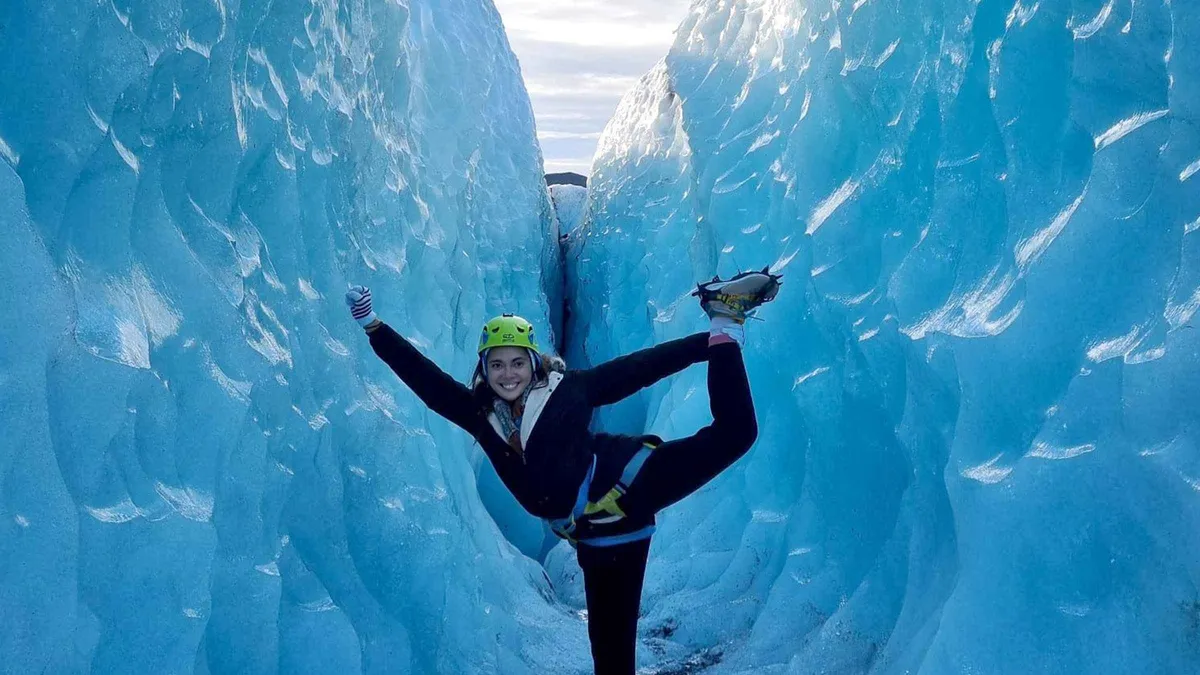
The first surprise for most people is the colour. Photographs sell blue ice; the lower tongue is black, streaked with ash so thickly that the whole valley reads like a monochrome photograph. Climb higher and a line appears where the surface turns white, and the blue shows up inside the cracks. That blue is not a trick of the light: ice turns blue when it has been compacted hard enough to squeeze the air out of it, so the bluer a wall looks, the more compacted the ice behind it is.
The ash comes in two kinds, and guides will point out the difference. Coarse dark grit from older Katla eruptions, and a finer, paler grey band from Eyjafjallajökull in 2010. Some of the black peaks standing across the surface were once the lowest points on the glacier: ash collected in those hollows, insulated the ice beneath it, and the surrounding surface melted away instead, leaving the old low ground standing proud.
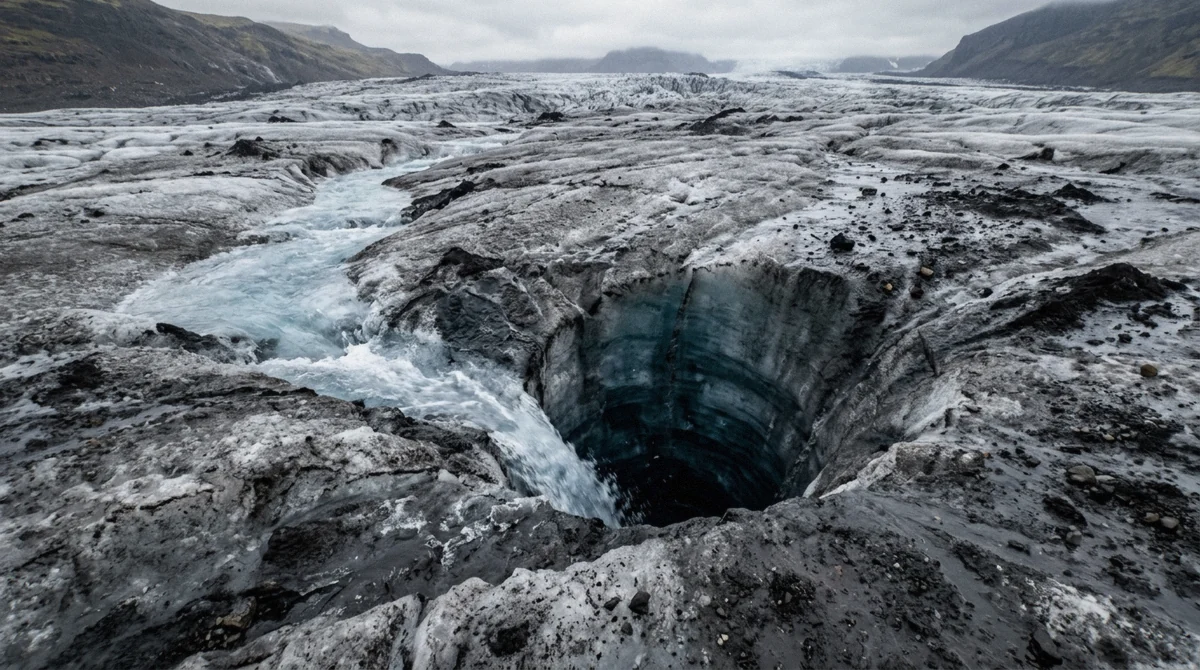
Beyond that you get crevasses, some narrow enough to step over and some you walk a long way around; moulins, which are sinkholes drilled straight down by meltwater; and surface streams cutting their own channels toward the lagoon. The water is drinkable and cold enough to hurt.
Ice caves are the one thing nobody can promise. They open and collapse on their own schedule, and a guide's cave from last week can be a pile of rubble today. If a tour lists a cave, read it as a possibility rather than an inclusion.
Sólheimajökull or Skaftafell?
This comes up in the search results often enough to answer plainly. Sólheimajökull is the closest hikeable glacier to Reykjavík: 158 km, two and a quarter hours, and a five-kilometre gravel road at the end. Skaftafell sits roughly twice as far east, so it only makes sense if you are already driving toward Jökulsárlón or staying in the south-east.
The ice differs too. Sólheimajökull is flatter and ash-heavy, which makes for gentler walking and a more dramatic surface. The Skaftafell tours walk Falljökull, an outlet with an icefall, so there is more relief and more blue.
If you have one day out of Reykjavík, take Sólheimajökull and add Skógafoss and Reynisfjara on the way. If you have a Ring Road itinerary and a night booked near Kirkjubæjarklaustur or Höfn, Skaftafell fits better. Doing both in one trip is fine and they do not feel repetitive.
How Fast This Glacier Is Changing
Front positions here have been measured every year since 1930, which is why the walk to the ice keeps getting longer and why the terminus needed a new access route in 2026. Figures below come from the Iceland Glaciological Society and Katla UNESCO Global Geopark.
2011
The lagoon appears
New feature
Meltwater lake forms
Depth today
60 m
Before 2011 the ice reached the ground you now walk around. Katla Geopark measures the lagoon at 60 metres deep and expects it to lengthen along the valley for decades.
2010
Eyjafjallajökull erupts
Ash layer
Fine pale grey band
Flights grounded
100,000+
The finest ash on the glacier dates from this eruption. It sits on the surface now not because it fell recently but because the ice covering it has melted away.
1995–2010
Sustained retreat
Length lost
750 m
Average
≈50 m a year
Measured front positions put the terminus 750 metres further back in 2010 than in 1995, an average near fifty metres a year across that stretch. Guides who have worked here a decade describe a different glacier.
22 July 2026
Margin flagged by the IMO
New hazard
East lagoon, unstable ice bridge
Result
New access track
A second lagoon opened east of the tongue and the ice bridge over it thinned. Operators cancelled, then reopened on a new route around Jökulhaus agreed with landowners.
Where the Tours Meet
Every hike on this page meets at the Sólheimajökull car park at the end of Road 221 (N 63.5328, W 19.3697), including the Reykjavík day trips, which drive you there. There is no street address, so navigate to the parking area rather than the glacier itself.
Hours You Actually Spend on the Ice
Listings advertise total duration, which counts gearing up, the drive and the walk in. The number that decides how a day feels is how long your crampons are on the glacier. Bars show that figure; the price and the total tour length sit underneath.
Full-day from Reykjavík1 h on ice$200 · 11 h total · Glaciers and Waterfalls · three sightseeing stops eat the day
Ice climb intro, Reykjavík1.5 h on ice$211 · 5.5–13 h · Arctic Adventures · half the ice time goes to the wall
Tröll 3-hour walk1.5 h on ice$120 · 3 h total · shortest gap between car park and crampons
Arctic Adventures hike1.5 h on ice$106 · 4 h total · the most reviewed hike meeting at the glacier
Tröll ice climb2 h on ice$237 · 4 h total · six guests per guide, roped vertical wall
David The Guide2 h on ice$120 · 4 h total · capped at 10, stops for glacier water
Icelandic Mountain Guides2.5 h on ice$104 · 4 h total · best ice time per dollar on this page
Figures come from the operators' own itineraries and rider notes. Time on the ice moves with weather, group pace and, since July 2026, the length of the new approach track.
What People Wrote After Going
★★★★★★★★★★
It was a great experience to walk on the glacier. Our package is good for the family with kid. Friendly guide.
Prabakaran · Verified booking · July 2026
★★★★★★★★★★
Al was an amazing guide! Really patient and full of information, really gave an amazing experience on the glacier! Rest of the day felt a bonus! So lucky to have seen puffins!
Jasynda · Verified booking · July 2026
★★★★★★★★★★
Michael was an excellent tour guide, very informative and funny, and made sure safety on the glacier was paramount. The experience was just amazing and should not be missed.
Lorretta · Verified booking · June 2026
The walk from the car park to the viewpoint is flat and takes 10 to 20 minutes. It costs nothing beyond parking, and it is as far as you go without a guide.
How to Read These Listings
Check where you meet, first
Some tours meet at the glacier car park and assume you drove. Others start in Reykjavík and add seven hours of coach time. Same ice, very different day.
Total hours are not ice hours
The eleven-hour day from Reykjavík puts you on the glacier for about one hour. The four-hour hike from the car park gives you two and a half.
Group size sets the pace
Six per guide on the ice climb, ten with David The Guide, fourteen with Icelandic Mountain Guides. Smaller groups stop less and get further in the same time.
Review counts are lopsided
1,671 reviews on the Reykjavík day trip against 69 on the ice climb. A 4.9 from 69 people is a different claim from a 4.8 from 1,671, and both are worth something.
Boots decide who joins
Crampons need EU 34 and ankle support. Trainers get turned away at the meeting point. Rent boots for 1,500 ISK rather than gamble on it.
Weather cancels, and that is fine
Wind and rain do not stop these hikes; unsafe ice does. Every tour here refunds a cancelled departure in full and lets you cancel free 24 hours ahead.
Daylight, Temperature and When to Go
Bars show usable daylight at Sólheimajökull in hours, with a typical daytime temperature in Celsius beneath each month. Colour marks how the access road and trail behave, which is what separates a winter booking from a summer one.
5hJanuary2°C
8hFebruary2°C
12hMarch3°C
15hApril6°C
18hMay9°C
21hJune12°C
20hJuly13°C
17hAugust13°C
13hSeptember10°C
10hOctober6°C
6hNovember3°C
4hDecember1°C
Winter: short days, road can close after snow
Shoulder: variable trail, fewer people
May to September: clear trails, long light
Hikes run every month. Morning departures are quieter than midday, when the coaches arrive from Reykjavík. Temperatures are indicative rather than an official normal, and the glacier runs colder than the car park; check the forecast at en.vedur.is before you drive.
You can walk to the viewpoint on your own, free, in 10 to 20 minutes from the car park. Stepping onto the ice is a different matter. The margin is crevassed, undercut by meltwater and, since July 2026, carries an unstable ice bridge over a new lagoon that the Icelandic Meteorological Office has warned about. Operators, guides and the authorities are unanimous on this one. The cheapest guided option is $104, and what the free walk does and does not give you is covered in full separately.
How difficult is the Sólheimajökull glacier hike?
Easy to moderate. The four-hour version covers about 6 km over uneven ground with moderate elevation change; the three-hour walk is shorter and flatter. Crampons feel strange for five minutes and then make sense. No experience is needed on any tour here except the ice-climbing routes, and even those teach you from scratch. What the hours on the ice actually feel like covers the fitness question, the age minimums and the EU 34 crampon rule in full.
How much does a Sólheimajökull glacier hike cost?
From $104 to $237 per person. Icelandic Mountain Guides at $104 is both the cheapest and the best rated, at 4.9 from 869 reviews. Adding ice climbing takes you to $237 with Tröll, and travelling from Reykjavík without a car costs $200 for the full day. Parking, if you drive yourself, is 750 ISK.
Is Sólheimajökull still safe to visit after the July 2026 warning?
Tours are running. The Icelandic Meteorological Office flagged an unstable ice bridge and rockfall risk on 22 July 2026, operators suspended departures for several days, and they then reopened on a new track around Jökulhaus agreed with the landowners. Authorities chose stronger warnings over closing the glacier. If you visit independently, stay off ice near the water and do not linger under steep slopes. Full detail here.
How do you get to Sólheimajökull from Reykjavík?
Drive 158 km (98 mi) east on Route 1, about two hours fifteen minutes, then turn onto Road 221 roughly 6 km past Skógar and follow 5 km of gravel to the car park. Parking is 750 ISK through the Parka app. Without a car, the day trip from Reykjavík includes pickup and adds Seljalandsfoss, Skógafoss and Reynisfjara; what those eleven hours actually buy is worth reading first. The full driving guide has the Road 221 turn, the Parka parking payment and the road-status checks.
Sólheimajökull or Skaftafell: which glacier hike?
Sólheimajökull if you are based in Reykjavík or Vík: it is the closest hikeable glacier to the capital, flatter, and heavy with volcanic ash. Skaftafell if you are already heading toward Jökulsárlón, since it sits about twice as far east and its tours walk an outlet with an icefall. Neither makes the other redundant.
What do you wear on a Sólheimajökull glacier hike?
Layers and no jeans. A wool base, a fleece, a waterproof shell, hiking trousers with waterproof over-trousers. Long socks, because the crampon straps sit over the boot. Sturdy boots with ankle support are mandatory and are not included; Arctic Adventures rents them for 1,500 ISK in EU sizes 36 to 47. Crampons, helmet, harness and ice axe come with every tour. What the operator provides and what you bring sets it out as a table.
Can children do the Sólheimajökull glacier hike?
From age 8 on the standard hikes, and the real constraint is boots: crampons will not fit anything under EU 34. Arctic Adventures' ice-climbing tour sets its minimum at 14, and what a first ice climb involves explains why. Younger children can still do the free viewpoint walk, which is flat and takes 10 to 20 minutes each way.
Where is the Sólheimajökull glacier viewpoint and is it free?
It sits at the end of a flat gravel path from the car park at the end of Road 221, 10 to 20 minutes each way. The walk costs nothing; you pay 750 ISK to park. From there you see the tongue, the ash bands and the lagoon with its small bergs. It is the whole glacier experience minus the part where you stand on the ice.
Can you hike Sólheimajökull in winter?
Yes, and every operator here departs year-round. What changes is daylight, which drops to about four hours around the December solstice, and the odds that wind cancels the morning. A cancelled departure is refunded in full. What winter actually changes on this glacier has the month-by-month daylight, the road checks and the rebooking maths.
Is there an ice cave at Sólheimajökull?
Sometimes, and only in the cold months. Natural caves at the margin are carved by summer meltwater and are entered roughly between November and March once refreezing makes them stable; entry is never guaranteed on any tour. The hikes here are sold as hikes, and $120 with Tröll heads for ice tunnels, moulins and crevasse edges. When there is a cave and when there is not explains the seasons and the alternatives.
Your guide
Sigrún Ólafsdóttir
Glacier guide, Mýrdalur district · guiding on the Mýrdalsjökull outlets since 2016
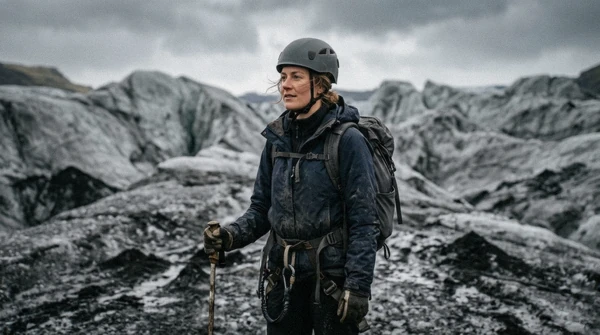
Ten seasons on the Sólheimajökull tongue, working out of the car park at the end of Road 221. Walked the new track around Jökulhaus the week the operators cut it, re-checks every meeting point each season, and will tell you when the free viewpoint walk is the honest answer to what you want.
Free cancellation on every hike here, and morning slots fill first in summer.
 Sólheimajökull Glacier Hike
 from $104
Cheapest and best rated
from $104
Cheapest and best rated